Industrial Electrician Kathmandu: Factory Maintenance | SDR
Factory downtime is expensive. SDR, industrial electrician Kathmandu, handles three phase wiring, panel compliance and plant AMC. Call 9801508528 today.
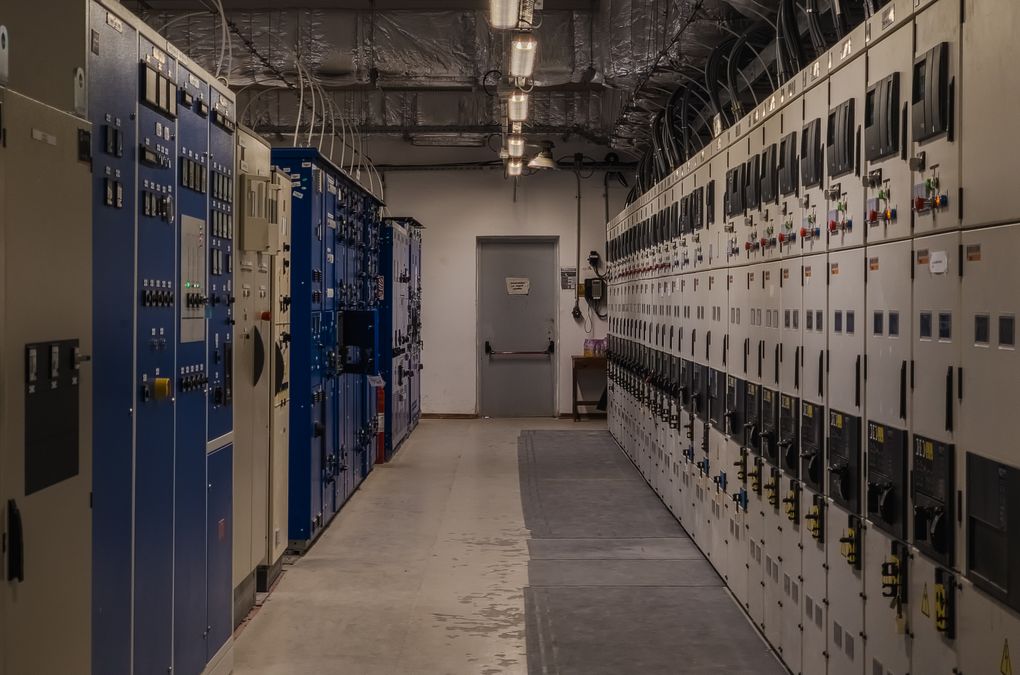
What does an industrial electrician in Kathmandu do?
An industrial electrician in Kathmandu keeps factories, mills, print shops, food processing lines and workshop machinery running safely on three phase power. Where a house electrician wires lights and sockets, an industrial electrician sizes machinery feeders, terminates motors and control panels, maintains distribution boards and switchgear, and responds the moment a production line stops because an MCCB has tripped or a contactor has burned out. SDR Smart Design and Repair covers plants across the valley, from the Balaju industrial corridor to the manufacturing belts of Bhaktapur.
A typical plant runs on a 415V three phase supply with a main incomer, sub-panels feeding individual machines, and a mix of MCCB, ACB and, in older sheds, rewireable fuses. When any link in that chain is undersized, unlabelled or unmaintained the result is the same: unplanned downtime, damaged motors and a fire risk behind a closed panel door. That is the work our factory electrician Nepal team does every week for clients who cannot afford a stopped line.
- Three phase machinery feeders, motor starters, VFD and control wiring
- Distribution panel build, upgrade, labelling and compliance testing
- Preventive maintenance visits plus fast breakdown response
- Annual maintenance contract (AMC) for factories and warehouses
Three phase industrial wiring in Kathmandu
Three phase industrial wiring in Kathmandu has to survive voltage imbalance, monsoon humidity, dusty shed roofs and loads that swing hard every time a large motor starts. Sizing follows cable capacity tables and the starting current of the biggest motor on the circuit: a 15 kW pump can draw five to seven times its running current for a second, and an undersized feeder or wrongly rated breaker will nuisance-trip on every start.
We route feeders in heavy gauge armoured cable or on perforated tray, gland every entry into a panel, and identify phases with the correct colour code so any electrician opening the board later can work safely. Balancing the three phases panel by panel matters just as much: an unbalanced board pulls current through the neutral, heats conductors and shortens the life of everything upstream of your main switch.
- Size cable for motor starting current, not just running load
- Balance the three phases across every sub-panel
- Armoured cable or tray routing with glands at each panel entry
- Phase colour coding, feeder numbers and circuit labels
Machinery feeds: sizing, starters and protection
Every machine needs its own dedicated feeder with a local isolator within sight of the operator. We size the cable for continuous load plus a service margin, pick the MCCB curve to suit the motor, and set the overload relay to the nameplate full-load current rather than a number guessed from the breaker. Star-delta and soft starter control wiring gets the same discipline: correct contactor ratings, interlocks that cannot both close, and control transformers isolated from the power side.
Machine earthing is not optional — each frame gets a green-yellow earth conductor sized for fault clearing, and socket outlets on the shop floor run at 30mA RCD protection. Starter boxes need the right IP rating for the environment: an open box beside a flour mill or a stone crusher will fail early, while a properly rated enclosure lasts for years without a single nuisance trip.
- Dedicated feeder and within-sight isolator for every machine
- Overload relay set to nameplate full-load current
- Star-delta, DOL or soft starter wiring with hard interlocks
- Machine frame earthing and 30mA RCD on all floor sockets
- IP-rated enclosures matched to dust and moisture conditions
Panel compliance: what inspectors check in Nepal factories
Panel compliance has moved from a paperwork exercise to the first thing auditors, insurers and NEA inspectors open. A compliant industrial panel in Nepal should show a correct busbar rating for its full load current, a short-circuit rating that matches the available fault level, clear phase identification, a circuit schedule inside the door, no open knockouts, and proper working clearance in front of the door. Anything less is a finding waiting to happen.
We also test what the eye cannot see: insulation resistance phase to phase and phase to earth, earth continuity from every machine frame back to the main earth bar, and RCD trip times on protected circuits. Results are recorded on a test certificate you can hand to your auditor. If your panel still uses rewireable fuses, has no labels, or has a busbar running hot, bring it up to standard before the next inspection rather than during it.
- Busbar and breaker ratings matched to actual load and fault level
- Circuit schedule, feeder labels and schematic drawing on the door
- Insulation resistance, earth continuity and RCD trip-time tests
- No open knockouts, correct IP rating and working clearance kept clear
- Earthing electrode resistance checked at the main earth bar
Downtime minimisation: planned maintenance beats emergency repair
An unplanned stop does not just lose production hours: it stresses the electrical system again on restart, often blowing a second component before the real cause is found. Downtime minimisation starts with a maintenance calendar based on running hours — contactors, overloads, filters and fan bearings replaced on schedule, terminals re-torqued while the board is already de-energised, and thermal scanning of live panels to catch hot terminals before they fail outright.
We keep a critical spares list with the client: the exact MCCB rating, contactor and overload relay for each line, so a failure becomes a 30-minute swap instead of a three-day wait for a part. Plants on a planned visit from SDR see breakdown callouts drop sharply within the first year, because most faults announce themselves as heat, smell or nuisance tripping weeks before they stop the line.
- Quarterly or monthly inspection visits matched to production hours
- Thermal scan of panels and terminations under full load
- Re-torque, clean and re-label during every scheduled visit
- Critical spares held on site for the highest-value machines
Industrial electrical maintenance AMC in Nepal: what it costs
An annual maintenance contract in Nepal is priced by plant size, panel count and response expectations. For a small workshop with one main panel and a handful of machines, a basic AMC covering four visits a year typically runs Rs 18,000–45,000. A mid-size factory with multiple sub-panels, MCCBs, transformers or generators usually sits between Rs 50,000 and Rs 1,50,000 per year for comprehensive cover including breakdown callouts. Large multi-shed operations are quoted per panel after a survey.
The cheaper AMC only shows its cost when a Saturday-night breakdown falls outside the visit schedule. Check what is included before signing: number of visits, response time, whether parts are extra, and whether the contract covers control wiring and lighting as well as power panels. SDR writes all of that into the agreement, and wider commercial budgets are set out at /blog/commercial-electrical-cost-nepal.
- Basic AMC, 4 visits/year, small workshop: Rs 18,000–45,000
- Standard AMC, quarterly visits plus callouts: Rs 50,000–90,000
- Comprehensive AMC, monthly visits and parts schedule: Rs 90,000–1,50,000+
- One-off breakdown callout outside contract: Rs 3,000–8,000 plus parts
Safety lockout before any panel is opened
No SDR electrician opens a live panel to save ten minutes. Our safety lockout procedure is simple and non-negotiable: isolate at the local isolator and upstream breaker, rack out or withdraw the breaker where the design allows, apply a personal lock and tag with the electrician name, prove the conductors dead with a calibrated tester on a known live source, then apply temporary earths where the work requires it. Only then does work start.
Locks stay with the person who applied them, tags record the reason and expected duration, and the machine operator is told before and after. It is the same discipline used by industrial electricians worldwide, and it is how a factory avoids the arc-flash and shock injuries that still happen when shortcuts are taken under production pressure. Arc-rated gloves, face shield and insulated tools are part of the kit on every job.
- Isolate, lock, tag, prove dead — every time, no exceptions
- Tester verified on a known source immediately before and after use
- Temporary earths applied where induced or back-feed risk exists
- Operators briefed before isolation and before re-energising
- Personal locks only removed by the person who fitted them
Book an industrial electrician in Kathmandu
SDR Smart Design and Repair works with factories and warehouses in Balaju, Kalanki, Koteshwor, Bhaktapur and the rest of Kathmandu Valley. Our industrial electrical team handles three phase installations, panel upgrades, preventive maintenance and AMC under one contract, so you are not coordinating three contractors when a line goes down. Start with a free site walk: we load-check your panels, note non-compliances and send an itemised scope in writing.
Send panel photos to WhatsApp 9801508528 or reserve a visit at /#booking in under a minute. Full service scope is at /services/commercial-electrical, our work in the Balaju belt is described at /areas/balaju, and budgeting for wider commercial works sits at /blog/commercial-electrical-cost-nepal — call SDR and keep your plant running.
- Free site survey and non-compliance list for your panels
- Itemised NPR quote: labour, materials, testing, AMC options
- 30-day workmanship warranty on all installation work
- Call or WhatsApp 9801508528 · book at /#booking
Need a licensed electrician in Nepal?
Book a service online in under a minute, or message us on WhatsApp for a free estimate. Serving Kathmandu, Lalitpur and Bhaktapur.