Water Pump Motor Wiring in Nepal: Cable, MCB & Starter
Correct water pump motor wiring in Nepal prevents burnouts — cable size, MCB/RCCB, starter, earthing and NPR costs for homes. SDR Kathmandu: call 9801508528
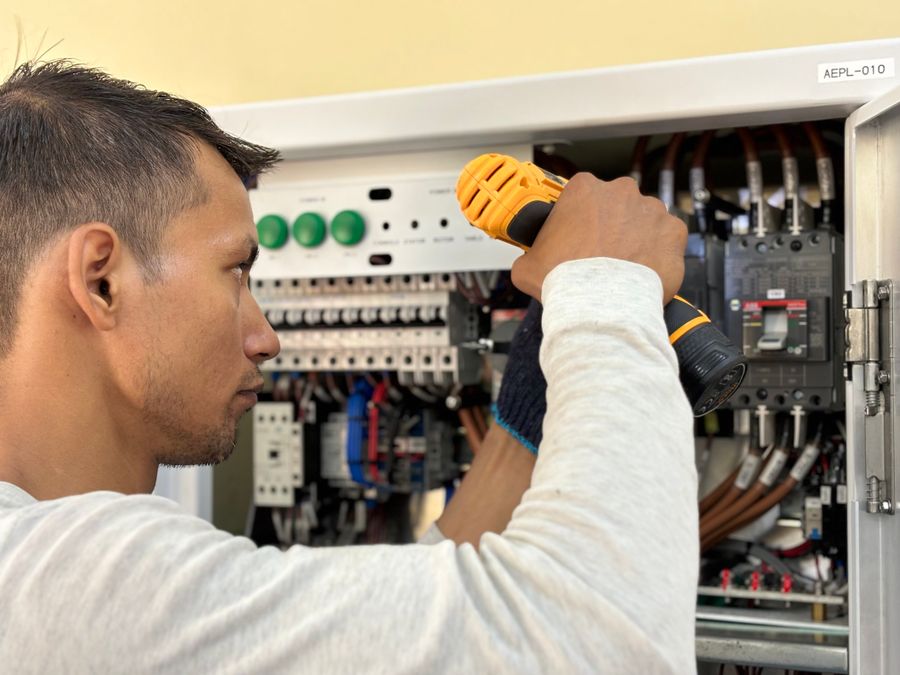
Water pump motor wiring in Nepal: the safe setup
Water pump motor wiring in Nepal fails in predictable ways: undersized cable heating in a conduit, a starter with no overload protection, a missing earth wire, and float switches that let the pump run dry for hours. A correct installation starts with the right cable size from board to pump, a dedicated MCB and RCCB for the circuit, a starter matched to the motor type, and a real earth rod connected to the pump body and the borewell head. Every one of those pieces costs less than a rewound motor and a dry tank.
Whether the job is a rooftop booster, a submersible in the garden, or a borewell set feeding the whole house, the principles are the same: protect the person, protect the cable, protect the motor. This guide covers cable sizing, MCB and RCCB selection, pump starter wiring, earthing, the common burnout causes we see across Kathmandu, and honest NPR costs for the work.
- Dedicated circuit with correctly sized copper cable
- MCB for overload and short circuit, RCCB for earth leakage
- Starter with overload relay and correct capacitor if required
- Earth rod bonded to pump body, board earth and borewell head
- Dry-run or float protection so the motor cannot spin without water
Cable size for submersible and booster pumps
Cable sizing is where most DIY pump jobs go wrong. A 0.5 hp single-phase booster at 10 metres of cable may be fine on 1.5 sq mm copper; the same motor at 80 metres of flat submersible cable needs a larger conductor or you will see voltage drop, heat and an early death. Borewell pump electrical Nepal work uses special flat cable rated for submersion, taped and clamped at every joint in the drop — joints left loose in water are a classic failure point we find when a submersible pump electrician Kathmandu call turns into a retrieval job.
As a working rule, size the conductor for full-load current plus roughly 25 percent, then check the voltage drop stays under about 3 percent for motor circuits and under 5 percent as an absolute ceiling on long runs. Three-phase pumps above 2 hp draw far lower current for the same power, which is why larger borewell sets are three phase. If your supply is still single phase and the pump keeps stalling, confirm your load calculation before adding a larger set — our guide at /blog/electrical-load-calculation-nepal shows the arithmetic.
- Up to 0.5 hp, short run: 1.5 sq mm copper minimum
- 0.5–1 hp or runs past 30 m: 2.5 sq mm copper
- 1.5–2 hp single phase: 4 sq mm and check voltage drop
- Submersible drop: flat water-filled cable with sealed taped joints
- Never mix pump and lighting on one shared MCB
MCB and RCCB protection for pump circuits
Every pump deserves its own breaker way. The MCB handles overload and short circuit — a stalled impeller, a seized bearing or a rodent-nibbled cable — while the RCCB (earth leakage device) trips when current escapes to earth through wet insulation or a person touching a live metal. In Kathmandu monsoon conditions, damp junction boxes and ageing cable make RCCB protection non-negotiable. Size the MCB to the cable and motor full-load current, not to whatever was already in the board.
If your pump circuit trips the main instead of a local breaker, or the RCCB will not hold after reset, the fault is still present — do not keep resetting. When a breaker trips, the fault pattern tells you where to look: overloaded circuit, earth leakage, or a dying motor. Our full cause-by-cause walkthrough at /blog/mcb-tripping-reasons-nepal matches each symptom to a fix, and recurring trips are a reason to book a professional inspection before the cable inside the wall takes damage.
- One dedicated MCB per pump, sized to full-load current
- 30 mA RCCB upstream of all wet-area and outdoor circuits
- RCBO combo where board space is limited
- Label the way PUMP so anyone can isolate it fast
Pump starter wiring: DOL, capacitors and float control
Pump starter wiring Nepal homes use falls into three groups. Small single-phase booster and garden pumps often run direct on contactor or overload relay — direct on line (DOL) — with a run capacitor that must be rated for continuous duty. Older monoblock sets sometimes still use a hand starter with a centrifugal switch; when that switch sticks, the motor hums and trips instead of running. Three-phase borewell and terrace pumps use a DOL or star-delta starter with a thermal overload relay set to the nameplate current.
Control logic matters as much as power wiring. A float switch in the tank stops the pump when water is high and starts it when low; a pressure switch runs a booster against the line; a dry-run protector shuts everything down if the well is empty. Wire the control circuit through the contactor coil so the overload relay can actually drop the motor out, and keep low-voltage control cable separated from power pairs in the same conduit. SDR draws and labels the starter diagram on the panel cover so the next electrician is not guessing.
- DOL starter for most up to 2 hp single-phase pumps
- Thermal overload relay set to nameplate full-load amps
- Continuous-duty run capacitor matched to motor rating
- Float or pressure switch through the contactor coil, not the phase tail
- Dry-run protection for borewell and submersible sets
Earthing the pump motor and borewell
A metal pump spinning in water with no earth path is a shock waiting for a hand on the outlet pipe. Bond the motor body, the board earth bar and a dedicated earth rod with continuous copper, and clamp the borewell head to the same system where local practice allows. Test the earth resistance after installation — damp garden soil in Kathmandu usually gives good numbers when the rod is properly driven and watered, but fill dirt over a new terrace can read high until settled.
Pair earthing with an RCCB: the earth path clears fault current fast, and the RCCB opens the circuit when leakage is too small for the MCB to notice. Together they are the difference between a tripped breaker and a fatal touch. If your board has no earth rod at all, that is a wider home safety issue, not a pump-only problem — book a check through /#booking and we will test the whole installation, not just the pump way.
- Earth rod with resistance measured and recorded
- Copper bond from motor body to board earth bar
- Borewell head and wet metalwork bonded to the same system
- RCCB 30 mA on the circuit for double protection
- Re-test earth before monsoon and after any excavation
Why water pump motors burn out in Nepal
After years of call-outs, the burnout causes repeat themselves. Running a pump dry until the bearings seize; over-voltage or severe under-voltage from long cable runs and weak supply; an overload relay missing or set too high; water logging into a surface motor left in the rain; capacitor failure leaving the motor single-phasing on a two-value start; and physical blockage — silt, a stuck impeller or a closed gate valve — that pins current at locked-rotor levels for minutes. Wet, cracked terminal boxes complete the list, letting moisture walk insulation resistance down until the winding faults.
Prevention is cheaper than rewinding. Stop free-running against a dead-head line, fit dry-run or float protection, replace tired capacitors before the season, and have windings megger-tested if a motor has already tripped hard. If a pump dies tonight and you have no water in the tank, our emergency team carries breakers, cable and spare starters on every van — details and response expectations are on /services/emergency-repairs — and a full audit of the circuit, board and earthing sits on /services/safety-inspections so the replacement does not fail the same way.
- Dry running and empty-well operation seize bearings and cook windings
- Long undersized cable causes low voltage and high current draw
- Missing or mis-set overload relay allows chronic over-current
- Rain-soaked surface motors without canopies fail insulation
- Failed run capacitor leaves the motor half-powered and overheating
- Closed discharge valve or blocked impeller locks the rotor
Water pump wiring cost in Nepal (NPR)
Prices depend on cable length, board condition and whether a new starter or earth rod is needed. A straight replacement of the supply cable to a surface pump with a new MCB and starter typically lands between NPR 8,000 and 25,000 in Kathmandu. New submersible or borewell drops — flat cable, joints, starter and earthing — run higher because of the cable length and the excavation or head work involved.
- Dedicated MCB/RCCB way added to the board: NPR 2,500–7,000
- Single-phase DOL starter with overload: NPR 3,500–12,000
- Cable run replacement (up to 30 m, copper): NPR 4,000–15,000
- Earthing rod, bonding and test: NPR 5,000–15,000
- Full submersible wiring package: quote after site survey
- Emergency call-out outside hours: from NPR 3,500 plus parts
Book a submersible pump electrician in Kathmandu with SDR
SDR Smart Design and Repair covers water pump motor wiring Nepal jobs from a single booster point to complete borewell electrical packages — cable sizing, MCB and RCCB protection, starter wiring, float control, earthing tests and labelled panels, across Kathmandu, Lalitpur and Bhaktapur. We quote in NPR before work starts, carry common breakers and capacitors on the van, and warranty our labour for 30 days. Open /#booking to reserve a slot, or call and WhatsApp 9801508528 with a photo of your pump, board and starter — a submersible pump electrician Kathmandu home owners trust will tell you on the call whether it is a starter, a capacitor, or a winding that has already said goodbye.
Need a licensed electrician in Nepal?
Book a service online in under a minute, or message us on WhatsApp for a free estimate. Serving Kathmandu, Lalitpur and Bhaktapur.