Kitchen Electrical Safety Nepal: Sockets & Circuits
Kitchen electrical safety Nepal checklist: socket layout, fridge and microwave circuits, DB earthing. Kathmandu homes — book SDR online or call 9801508528.
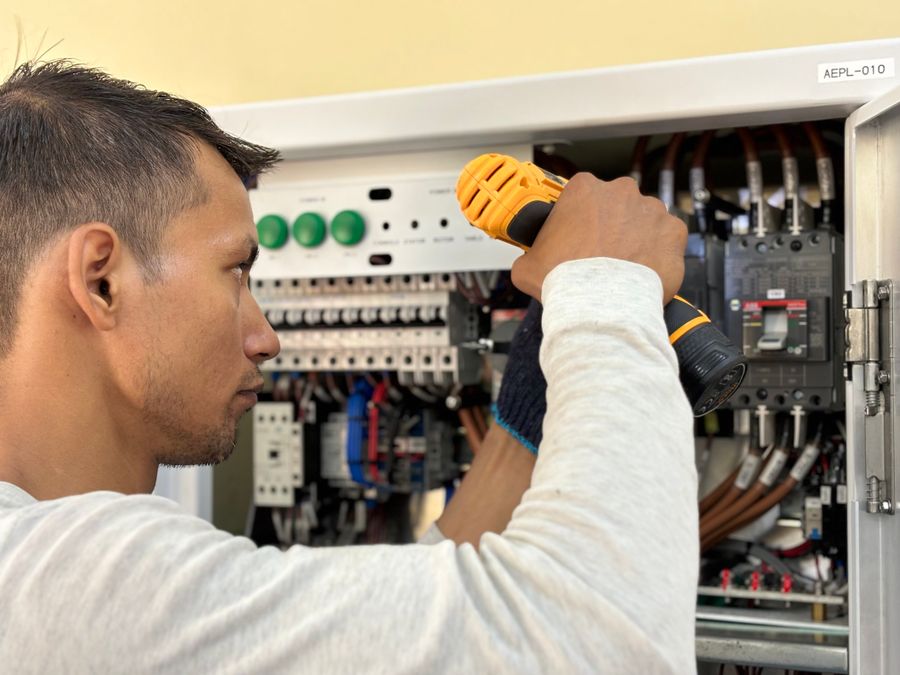
Why kitchen electrical safety matters in Nepal
Kitchen electrical safety in Nepal is a load problem, a moisture problem and a maintenance problem at the same time. One counter may run a microwave, kettle, blender, rice cooker and toaster while the fridge and chimney share the same tired circuit — and in Kathmandu’s older flats those circuits were often sized for lights alone. When the MCB finally trips at dinner, the instinct is to upsize the breaker instead of asking whether the cable can take it. That shortcut is how kitchen circuits become fire hazards.
SDR Smart Design and Repair audits kitchens as dedicated systems: socket layout, circuit allocation, earthing, board condition and child protection. This kitchen wiring checklist for Nepal follows that order, with NPR costs for the fixes we quote most often, so you can compare any electrician’s proposal against a clear standard before work starts.
- Dedicated circuits for fridge, microwave and heavy loads
- Socket layout that keeps plugs away from sinks and hobs
- Clean, grease-free distribution board with tight terminals
- Verified earthing plus RCCB on socket circuits
- Child-safe outlets and labelled breaker schedule
Kitchen socket layout for Kathmandu homes
A good kitchen socket layout in Kathmandu plans for appliances you actually own, then adds one spare. Worktop zones — preparation, cooking, washing — each want their own double outlet, positioned clear of the sink edge and any hob surface. Industry practice keeps general sockets at least 300mm from the sink rim and never directly above the worktop where a boiling pot can steam the faceplate. Height matters too: sockets at 1,200–1,300mm above the counter are reachable without dragging a cable across the prep area.
Avoid the classic Nepali build habit of a single outlet behind the fridge feeding a power strip that services half the kitchen. Plan at least six to eight outlets for a standard family kitchen, run them on two or more circuits, and include one high outlet for the chimney or water purifier where a plug is required. Extension cords under cabinets are a layout failure, not a solution — if you need one daily, the socket is in the wrong place.
- Double outlets at each work zone: prep, cooking, washing
- Keep general sockets 300mm+ clear of the sink rim
- No sockets directly above the hob or worktop splash zone
- 6–8 outlets minimum for a family kitchen, split across circuits
- One spare outlet per run for future appliances
Dedicated circuits: fridge, microwave and heavy loads
A fridge circuit in Nepal should be exactly that — dedicated. The compressor cycles day and night, draws a high inrush at start-up, and must not share with kettle or toaster loads that cause nuisance trips and food spoilage. Run the fridge on its own 16A way from the distribution board with its own MCB, good earthing and a socket that nothing else plugs into. The same logic applies to the microwave (typically 10–16A), the chimney, the water heater under the counter and any 3,000W+ appliance.
Sharing is where cheap builds save money: one 20A circuit feeding the entire counter works until festival cooking stacks every appliance at once. Then the breaker trips mid-meal or — worse — the cable runs hot inside the wall because someone replaced the MCB with a larger one and left the conductor undersized. Correct practice is more ways in the board, correctly sized cable per circuit, and a schedule on the door so every way is labelled. Full board work is scoped at /services/panel-upgrades.
- Fridge: dedicated 16A way, own MCB, nothing else on the socket
- Microwave: own circuit or a high-draw way shared only with light loads
- Kettle, toaster, rice cooker: socket circuits split two-way minimum
- Never upsize an MCB without checking the cable behind it
- Label every way on the distribution board schedule
Microwave and fridge loads: what the numbers say
Nameplate numbers tell you what to size. A domestic microwave is usually 700–1,200W (about 6–10A at 230V), a fridge 100–200W running with a start-up spike several times higher, a kettle 1,500–2,000W, a rice cooker 700–1,000W, and an induction hob 2,000–3,000W. Add the simultaneous worst case — fridge cycling, microwave running, kettle boiling — and you can see why a single 16A radial cannot honestly serve the whole counter.
Cable sizing follows current: 1.5mm² suits lighting-class loads, 2.5mm² is the normal minimum for 16A socket circuits, and 4mm² or a 20A way is appropriate for hobs and high-draw fixed equipment. Electricians who size by habit instead of by load leave kitchens that trip in normal use. A quick load tally during your kitchen safety inspection catches this before the festival rush does.
- Fridge: 100–200W running, high start-up inrush
- Microwave: 700–1,200W
- Kettle: 1,500–2,000W
- Induction hob: 2,000–3,000W — its own circuit, not a socket spare
- Default socket cable: 2.5mm² on 16A MCBs
Grease in the distribution board: a quiet failure
Kitchens aerosolise grease, and that film finds its way into the distribution board when the DB sits near the cooking area or shares a wall cavity with it. Grease on terminal screws insulates heat, attracts dust into a conductive blanket, and — combined with loose terminations thermal cycling — raises terminal temperature year after year. We open boards in Kathmandu kitchens that are tacky to the touch, and the ways serving the cooker and sockets are exactly the discoloured ones.
Fixing it is straightforward and cheap compared to a fault: isolate supply, clean or replace affected hardware, re-torque every terminal to spec, and confirm breaker ratings still match the cables. If the board is old, undersized or lacking spare ways for the circuits the kitchen should have, a panel upgrade beats nursing a contaminated enclosure. Grease, heat and vibration are three strikes against a consumer unit that was never designed for a cooking wall.
- Keep the DB off the cooking wall where layout allows
- Annual terminal re-torque on high-load ways
- Replace any discoloured, tacky or corroded terminals
- Never paint, seal or wall-mount a board so it cannot be opened
- Upgrade if the board has no spare ways for dedicated circuits
Earthing and RCCB protection in the kitchen
Earthing is what gives a fault somewhere to go — and in a kitchen full of metal appliance bodies, a missing or high-resistance earth is severe. Every fridge, microwave, mixer and hob chassis should bond back to a continuous earth path to the main earth terminal. Test it at the board, not by trusting an old green wire someone once mentioned. Nepal’s monsoon raises leakage paths too: moisture plus a poor earth is how a toaster shell can become live without the breaker noticing.
Pair solid earthing with a 30mA RCCB on the kitchen socket circuits. The RCCB covers the scenario the MCB cannot — current leaking through you to the floor. Device cost runs NPR Rs 2,500–6,000, fitted additions Rs 3,500–7,500. Test it monthly. Houses that pass an earth check but lack an RCCB are half-protected; houses with an RCCB but corroded earth bonds are relying on one layer when they think they have two.
- Continuous earth from every metal appliance body to the main terminal
- Earth continuity and resistance tested, not assumed
- 30mA RCCB covering all kitchen socket circuits
- Monthly RCCB test-button check
- Monsoon-season re-check on older installations
Child safety and everyday kitchen habits
Child-proofing the kitchen electrical side is cheap: shuttered or shutter-insert outlets on all reachable points, a socket cover on the spare by the sink, kettle leads routed to the back of the counter, and no multi-plug adaptors stacked under the sink where a leak and a plug share a box. Teach one rule early — wet hands do not touch plugs — but do not rely on it; design the room so the outlet position makes the mistake harder.
Everyday habits matter as much as the install. Do not daisy-chain power strips along the worktop, unplug high-draw appliances when not in use, and stop using the fridge socket as a hub for the blender and charger. If a plug or plate feels warm, smells of plastic or leaves scorch marks, stop using that point the same day. Warm terminals under load are a fault in progress, not a quirk of old wiring.
- Shuttered outlets within child reach
- No adaptors stacked under the sink or beside water
- Kettle and cooker leads kept at the back of the counter
- No daisy-chained power strips along the worktop
- Warm or scorched plug = same-day isolation and check
Kitchen wiring checklist for Nepal homeowners
Print this kitchen electrical safety checklist and walk the room with a torch. If more than two items fail, book the inspection rather than patching one by one — clustered failures usually share a root cause in the board or the incoming supply.
The audit covers circuit allocation, socket positions, earth continuity, RCCB operation, board cleanliness, cable condition behind the fridge and hob, and labelling. In Kathmandu a standard kitchen-focused inspection runs about NPR Rs 2,500–5,000 and feeds directly into an itemised repair quote. The broader room-by-room standard we work to is also summarised at /blog/home-electrical-safety-checklist-nepal, with hands-on checks under /services/safety-inspections.
- Fridge and microwave on dedicated or correctly rated ways
- Sockets clear of sink and hob splash zones
- No extension leads in daily service
- RCCB present, labelled, test button trips
- Earth bonds tight on all metal appliance bodies
- Board clean, terminals bright, schedule on the door
Book a kitchen safety inspection in Kathmandu
Kitchen electrical safety pays back every time the whole counter runs at once — no trips, no hot plates, no guessing which breaker is which. Send SDR a photo of your distribution board and one of the counter sockets on WhatsApp or call 9801508528 for a free first read on what looks wrong. We cover Kathmandu, Lalitpur and Bhaktapur with itemised NPR pricing before any work begins.
To reserve, use /#booking in under a minute, or start with /services/safety-inspections for a full house diagnosis or /services/panel-upgrades if the board itself is the bottleneck. Either path ends with dedicated circuits where they belong, earth and RCCB verified, and a labelled board you can actually use when something trips.
- Free WhatsApp photo review of board and sockets
- Itemised NPR quote: circuits, RCCB, outlets, labour
- Dedicated fridge/microwave ways and correct breaker sizing
- Book at /#booking or call 9801508528
Need a licensed electrician in Nepal?
Book a service online in under a minute, or message us on WhatsApp for a free estimate. Serving Kathmandu, Lalitpur and Bhaktapur.